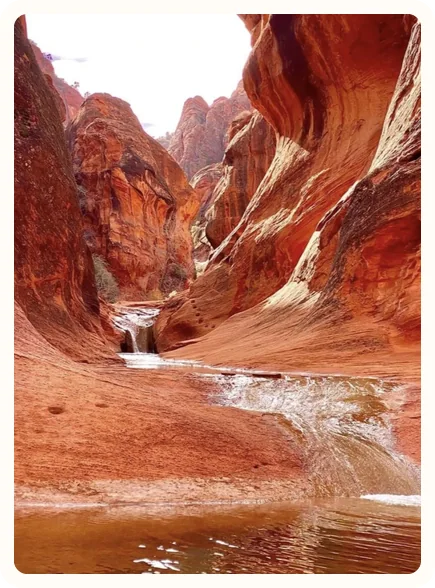
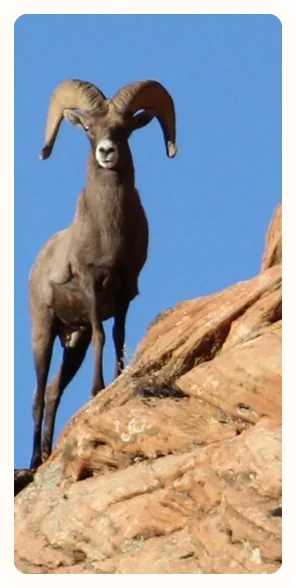
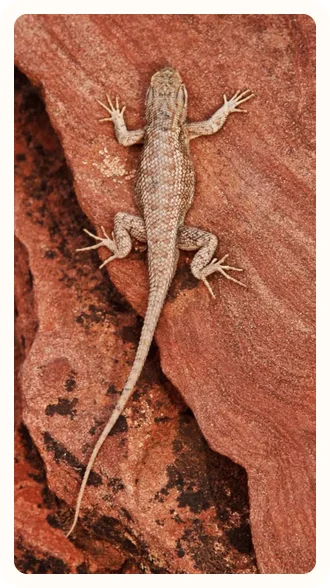
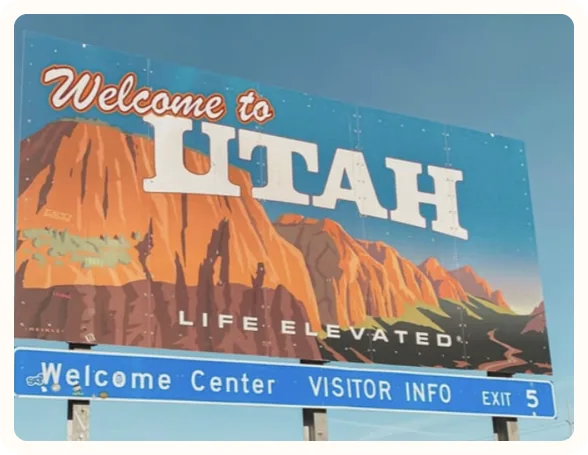

Unless someone like you cares a whole awful lot, nothing is going to get better. It's not. In the words of Dr. Seuss, action is crucial to change, a lesson our local community needs to learn about land conservation. Our planet is adorned with breathtaking landscapes, from the majestic Yellowstone in Wyoming to the sprawling Everglades in Florida, each mile a testament to millions of years of natural evolution. These wonders serve as iconic symbols of exploration. When early pioneers bestowed names upon the extraordinary rock formations of Southern Utah, they named the area "Zion," a term that means “Kingdom of Heaven”. This historical reverence for the land underscores the significance of our responsibility to protect it.
However, it is disconcerting to witness the degradation of these natural marvels due to the relentless march of industrialization and short-sighted economic pursuits. Land conservation, the practice of safeguarding these irreplaceable elements of our environment, is not merely a noble endeavor but a necessity for the revitalization of learning, the preservation of history, and the sustenance of economic growth.
Government involvement in land conservation allows for education to be at the forefront of our nation's thinking. The first National Park, Yellowstone, was established in 1872 to protect public lands under the Secretary of the Interior, and later in 1916, the National Park Service was put into place worldwide. Since its initial formation, the National Park Service has been built with the mission of land conservation and equal distribution of knowledge. Organizations surrounding this effort have shaped generations through programs like Every Kid Outdoors, which provides free admission to children at national parks, or the Youth Conservation Corps created in 1970 to allow teens to grow through environmental work projects. In a time when students have been kept indoors because of extreme circumstances, experiential learning is precisely what can revive a nation from a lack of creativity and worldliness. The assertion that industrialization holds greater significance than land conservation fails to withstand scrutiny, particularly when one considers the invaluable contributions these conserved lands provide. The destruction of nature is the destruction of knowledge, and the decimation of microclimates is in the likeness of burning books. Experiential learning is a philosophy in which life experiences, work, and interactions play a primary role in processing new information. Our government needs to recognize that there is a problem with conformity in the rising generations, and conformity leads to a society of boring people. To this end, by creating more funding and accessibility to programs that conserve our lands together, we can diversify and build a community of extraordinary people.
Conserving land is not just about wildlife but also commemorating history. Throughout time, people have traveled long distances in search of new lives, leaving indelible marks on once barren spaces. Ellis Island in New York is an example of this. This land that now hosts the Statue of Liberty was once the site of millions of immigrants coming into the New World. This island represents how America is a land of opportunity and a melting pot of culture, but preserving this land also creates a memorial for the ideals our nation was built upon. Similarly, the Gettysburg battlefield has been preserved as a reminder of our nation's hallowed grounds. Although Gettysburg was a win against slavery and served as a turning point for the Union, it also now serves as a reminder of American division and what division costs our nation, commemorating the 51,000 soldiers that died there. These lands are crucial because of their history, and to walk upon them is to remember how far America has come as a country. What is interesting about these types of historical monuments is that undoing the preservation of Gettysburg seems completely outlandish, but that is exactly what is happening to the red rocks in Southern Utah.
The Antiquities Act of 1906, established by Theodore Roosevelt, was the first law put in place that established legal protection of grounds that have cultural or natural significance. This law allows for the President to unilaterally declare landmarks of scientific or historic value without congressional approval. Large plots of land such as national parks, national conservation areas, or wilderness areas are also voted on and declared by Congress. However, because of the Antiquities Act, lands conserved previously by past presidents are not definite.
Layers of rock have been on this earth far before humans, and they will remain long after. There is a story of millions of years hidden in the crust of Utah rock. Where battlefields hold souls of the dearly departed, the geology of Southern Utah possesses both a natural and cultural beating heart. Which is why the degradation of these sacred spaces is alarming. The Grand Staircase Escalante is a region of Southern Utah that is home to the iron-oxidized canyons that make this state world-renowned. The Grand Staircase Escalante was established by Bill Clinton in 1996 and consisted of 1.87 million acres of conserved land, but in 2017, the size of the monument was decreased by 1 million acres by the Trump administration. In 2021, the monument experienced a short-lived restoration as the Biden administration renewed all previously usurped acreage; although this was overturned recently in July of 2026, the monument was significantly decreased to only 181,541 acres, slashed by 90 percent. In just 30 years, certifiably valuable land becomes no longer a federal concern, and the fate of these precious lands now lies in the hands of the Utah legislature.
Federal Legislation must realize the impression that decreasing conserved land makes. The Trump administration was able to pass this off as handing the power back to the state of Utah, but whether that is true is up to you. Under these layers of history, we discussed the grounds of this monument. The Kaiparowits Plateau within the monument holds some of the largest unmined coal deposits in the United States. Leaving this land unprotected opens it up for commercial leasing, drilling, and mining. Companies are working quickly to secure different parts of these lands, such as Kane and Garfield counties. Privatization and development on lands such as these destroy the natural history written in the rock's foundation, which cannot be easily undone.
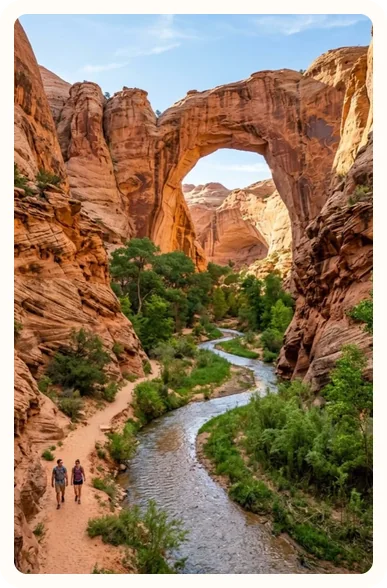
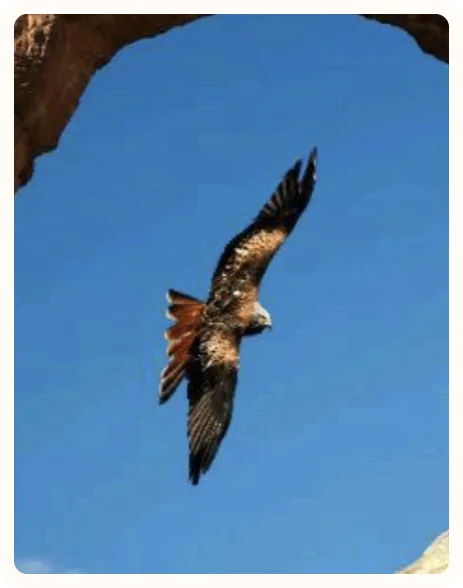
A canyon’s edge rises, orange cutting into the blue sky; a swooping arch meets sand, and here, carved into the wall, you find ancient carvings etched into sandstone. Carvings that tell a story of the human experience. These lands were once the home to the Fremont and ancestral Puebloan peoples, and they still hold profound spiritual importance to the 6 tribal nations of Utah: the Hopi Tribe, the Navajo Nation, the Kaibab band of Paiute Indians, the Paiute Indian Tribe of Utah, the Ute Mountain Ute Tribe, and the Zuni Tribe. This land is not just a beautiful place to admire; it is the land of prayers, of heritage, of human beings. In opening this area up to mining, Utah seeks to erase a homeland. In the United States, colonization and forced assimilation are taught in school as actions of the past, but July was just 3 months ago.
It is easy to understand why the United States wants to mine, for the lucrative monetary value. It is a plain and simple answer, but there are economic reasons for conserving land. From a purely profit-driven mindset, mining these areas will not positively affect the economy in the long run. Mining makes up a very small portion of the local economy, averaging 24 jobs a year, whereas tourism plays a major role, accounting for 51% of private wage and salary jobs. Since the designation of the monument, service jobs grew from 4,029 jobs to 7,289 jobs, an 83% increase. Outdoor recreation contributed more than 9.76 billion to Utah’s economy in 2023. Land creates economic growth and provides wealth to local economies. The government's control over these lands is beneficial to the physical environment and creates a prosperous financial system in the surrounding areas. Conserved land creates attraction, and with people comes money, which is vital in keeping these small towns running. Conservation of land gives way to an economic fountain of profitability that otherwise would go unseen. What happens after these lands have been mined and harvested of all their natural resources? When these lands are no longer a place of recreation, the economy fails, the people suffer as a result, and so does the Utah economy.
In conclusion, the federal government needs to have greater control over the conservation of land because the people of Utah deserve it. The land is a vessel of education, and if we do not protect it, future generations will never know the lessons it taught us. Likewise, this land is a land of people of generations, of forefathers, of families who protected these lands with a spiritual reverence; not acknowledging that value to our country would be an irrevocable mistake. The world runs on money, on the transaction of hands that is not lost on me, and that is what makes this even more important: the Utah economy is dependent on tourism; without it, we will surely fail. The world keeps advancing and continues to produce, but taking a step back to conserve will be far more successful; we must act before it's too late. Unless someone cares a whole awful lot, nothing is going to get better. It's not.
As always,THAT'S WHAT SHE SAID.